
Evidence
What the research says about easy exchanges
Updated August 2026
The commercial argument for a good returns portal is not that returns get cheaper. It is that a share of them stops being a refund. Here is the published evidence, and what it means for a Nordic Shopify store.
- 76%
- Of consumers say free returns decide where they shop
- NRF & Happy Returns, 2024
- 67%+
- Of retailers planned to upgrade returns capability within 6 months
- NRF & Happy Returns, 2024
- 22M+
- Returns analysed across 4,000+ Shopify brands
- Loop Returns Benchmark 2024
- $843M
- Revenue retained through exchanges and store credit
- Loop Returns Benchmark 2024
1. Returns policy decides where people buy
NRF and Happy Returns found that 76% of consumers consider free returns a key factor in deciding where to shop, and more than two-thirds of surveyed retailers said upgrading returns capability was a priority within six months. Returns are not a back-office topic; they are an acquisition variable.
2. Exchanges retain revenue that refunds destroy
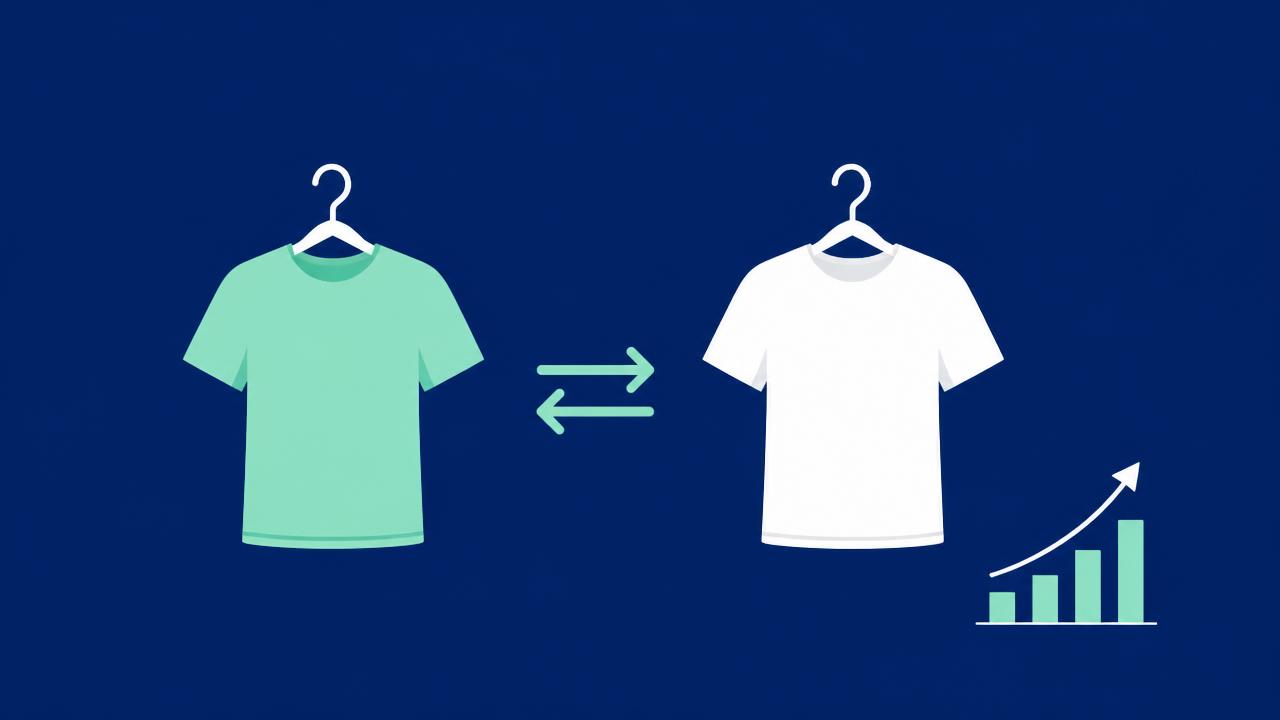
A refund removes the order value from the business and leaves you with the outbound and inbound shipping cost. An exchange keeps the revenue and usually costs one extra parcel. Loop Returns, analysing over 22 million returns from more than 4,000 Shopify merchants, frames retained revenue through exchanges and store credit as the core lever for returns profitability, and reports $843M in revenue retained for its brands.
The mechanism is simple: when the customer's first option is 'get the right size' rather than 'get your money back', a meaningful share of refunds converts. The single biggest driver in apparel and footwear is fit — which is an exchange, not a rejection of the product.
3. Friction, not intent, causes refunds
Narvar's 2024 State of Returns argues for treating the return as a 'reverse checkout': an optimised flow converts returns into exchanges or store credit and preserves revenue. If the exchange requires an email exchange with support, a second checkout and a wait, the customer takes the refund — even when they wanted the product.
- Show the alternative sizes and products before offering the refund option.
- Show the price difference in the customer's own currency, before they confirm.
- Collect any upcharge immediately with a Shopify checkout link, do not invoice later.
- Ship the replacement as soon as the return is scanned, not after it is received.
4. What this means for your P&L
Take a store doing 3,000 orders/month at DKK 900 AOV with a 25% return rate — DKK 675,000 of returned value each month. Shifting just 20 percentage points of those returns from refund to exchange retains DKK 135,000 in monthly revenue. That is the entire economic case for a returns portal, and it does not require a single extra visitor.
The same portal reduces support contacts, removes manual label booking, and produces the compliance trail the EU right of withdrawal requires.
How Nexly is built for this
Nexly puts the exchange first: same product in another size, or any product from your Shopify catalogue, with live availability and correct currency pricing. Price differences create a Shopify draft order and invoice automatically, refunds are only offered after the exchange path, and outbound replacement labels are created and fulfilled in Shopify from the same screen.
About these figures
The NRF figure is survey research; the Loop and Narvar figures are vendor-published benchmarks based on their own merchant data. The worked examples above are illustrative models using your own AOV and return rate — not guarantees.